
Unlearned and Outclassed: What Powers Your Witness?

Craig Hargrow • Pastor
October 11, 2026

8 Minute Read

Many Christians struggle with sharing their faith. They worry about saying the wrong thing, not knowing enough Scripture, or losing an argument. But what if sharing your faith was never about winning a debate in the first place? Acts chapter four offers a powerful and practical look at what it truly means to be a witness for God.


What Is Acts Chapter Four Really About?


To understand Acts 4, it helps to know what came just before it. Peter and John had healed a man who had been lame, right there in the temple courts. The miracle drew a massive crowd, and Peter did what Peter always did: he started preaching about Jesus.


That got the attention of the wrong people. The priests, the captain of the temple, and the Sadducees showed up. They were not happy. This was not a friendly conversation. It was confrontational and adversarial. And it sets the stage for one of the most important questions in the entire passage.


By What Power Did You Do This?


The religious leaders arrested Peter and John and brought them before a gathering of rulers, elders, scribes, and high priests. These were the most powerful spiritual and religious figures in all of Jerusalem. They put Peter and John in the middle of the room and asked them directly: “By what power or by what name have you done this?”


They wanted to know how two ordinary, uneducated fishermen had healed a lame man and stirred up the entire city.


Peter’s answer was immediate and bold. He told them exactly what they did not want to hear.


“Then Peter, filled with the Holy Ghost, said unto them... by the name of Jesus Christ of Nazareth, whom ye crucified, whom God raised from the dead, even by him doth this man stand here before you whole.” — Acts 4:8–10 (KJV, excerpt)


Peter did not stammer. He did not apologize. He stood flat-footed and told the truth.


What Powers Your Witness as a Christian?


The key phrase in Peter’s response is easy to miss if you read too fast: “filled with the Holy Ghost.” That is the answer to the question. That is what powered his witness then, and it is what powers our witness now.


The Holy Spirit Gives You Power to Speak


Scripture is consistent on this point. In Second Timothy, Paul writes, “For God hath not given us the spirit of fear; but of power, and of love, and of a sound mind” (2 Timothy 1:7, KJV). In John 14:26, Jesus promises that the Holy Spirit “shall teach you all things, and bring all things to your remembrance, whatsoever I have said unto you.” And in Acts 1:8, Jesus tells His disciples directly: “But ye shall receive power, after that the Holy Ghost is come upon you: and ye shall be witnesses unto me.”


Even in the Old Testament, the pattern holds. In Judges 14, when a young lion came against Samson, the Scripture says the Spirit of the Lord came mightily upon him and he tore the lion apart with his bare hands. That is the kind of power available to those filled with the Holy Spirit.


There Is No Substitute for Time With Jesus


The religious leaders noticed something else about Peter and John beyond their boldness. Acts 4:13 says they “took knowledge of them, that they had been with Jesus.” Spending time with Jesus was evident. It showed.


Jesus Himself said in John 15:5, “I am the vine, ye are the branches: He that abideth in me, and I in him, the same bringeth forth much fruit: for without me ye can do nothing.”


If your witness feels weak, it is worth asking two honest questions. How is the Holy Spirit moving in your life? And how much quality time are you spending with Jesus?


Why a Changed Life Is the Most Powerful Testimony


After Peter’s bold response, the leaders wanted to push back. They were angry. But then they looked over and saw the man who had been healed standing right there with Peter and John. And the Scripture says they “could say nothing against it” (Acts 4:14).


It is hard to argue against a changed life.


Second Corinthians 5:17 says, “Therefore if any man be in Christ, he is a new creature: old things are passed away; behold, all things are become new.” Matthew 7:20 says, “Wherefore by their fruits ye shall know them.” And Jesus said in Matthew 5:16, “Let your light so shine before men, that they may see your good works, and glorify your Father which is in heaven.”


When your life has genuinely been changed by the gospel, that change becomes its own argument. People can debate theology. They cannot easily debate what they can see standing right in front of them.


What to Do When People Try to Silence Your Witness


The religious leaders, unable to deny the miracle, did what people in power often do when they cannot refute the truth. They tried to silence it. They commanded Peter and John not to speak or teach in the name of Jesus at all.


Peter and John’s response was simple and direct. They said, in effect, you decide whether it is right in God’s sight for us to listen to you over God. As for us, we cannot stop telling people what we have seen and what we have heard.


They did not argue. They did not debate. They simply stated where they stood and why.


This same language shows up again in First John 1:1–3: “That which was from the beginning, which we have heard, which we have seen with our eyes, which we have looked upon, and our hands have handled, of the Word of life... That which we have seen and heard declare we unto you, that ye also may have fellowship with us.”


You Do Not Need a Degree to Share Your Testimony


Peter and John were described as unlearned and ignorant men. They had no formal religious training. They held no titles. They had no credentials that the religious establishment would recognize.


But they had two things that could not be taken from them. They had the Holy Spirit, and they had a testimony.


You do not need to win a theological argument to be a witness. You do not need to know more Bible verses than the person you are talking to. All you need is a willing heart and the story of what God has done in your life.


He healed you. He brought you back. He made a way when there was no way. He turned your mourning into joy. He found you when you were lost. That is your testimony, and nobody can take it away from you.


God has been too good to act like He has never done anything for you.


Sharing Your Faith Is Not About Winning an Argument


One of the most freeing truths in this passage is this: your job is not to convince anyone. Your job is to testify. You take the stand, you tell the truth, and you let God do the rest. People can receive it or reject it, but you have done your part.


Stop overthinking it. Stop imagining everything that could go wrong. Just tell people what you have seen and what you have heard. That is the witness. That is the testimony. And it is more powerful than any argument you could ever make.


Life Application


This week, find one person and simply tell them what God has done for you. Not a sermon. Not a debate. Just your story. Think of one specific thing God has done in your life, whether it was healing, restoration, peace in a hard season, or simply waking you up this morning, and share it out loud with someone who needs to hear it.


Before you do, ask yourself these questions:


• Am I spending enough quality time with Jesus for His presence to be evident in my life?

• Is the Holy Spirit actively at work in how I speak and live, or am I trying to witness in my own strength?

• Does my life show the proof of the gospel, or am I keeping my testimony to myself?

• What is one specific thing God has done for me that I have not yet told anyone about?


You are the proof in the pudding. Your changed life, your story, your testimony is the most powerful witness you have. Do not sit on it.

Up Next
From this Tag: Saved to Share
October 11, 2026 • 8 Minute Read
Unlearned and Outclassed: What Powers Your Witness?
Many Christians struggle with sharing their faith. They worry about saying the wrong thing, not knowing enough Scripture, or losing an argument. But what if sharing your faith was never about winning a debate in the first place? Acts chapter four offers a powerful and practical look at what it truly means to be a witness for God. What Is Acts Chapter Four Really About? To understand Acts 4, it helps to know what came just before it. Peter and John had healed a man who had been lame, right there in the temple courts. The miracle drew a massive crowd, and Peter did what Peter always did: he started preaching about Jesus. That got the attention of the wrong people. The priests, the captain of the temple, and the Sadducees showed up. They were not happy. This was not a friendly conversation. It was confrontational and adversarial. And it sets the stage for one of the most important questions in the entire passage. By What Power Did You Do This? The religious leaders arrested Peter and John and brought them before a gathering of rulers, elders, scribes, and high priests. These were the most powerful spiritual and religious figures in all of Jerusalem. They put Peter and John in the middle of the room and asked them directly: “By what power or by what name have you done this?” They wanted to know how two ordinary, uneducated fishermen had healed a lame man and stirred up the entire city. Peter’s answer was immediate and bold. He told them exactly what they did not want to hear. “Then Peter, filled with the Holy Ghost, said unto them... by the name of Jesus Christ of Nazareth, whom ye crucified, whom God raised from the dead, even by him doth this man stand here before you whole.” — Acts 4:8–10 (KJV, excerpt) Peter did not stammer. He did not apologize. He stood flat-footed and told the truth. What Powers Your Witness as a Christian? The key phrase in Peter’s response is easy to miss if you read too fast: “filled with the Holy Ghost.” That is the answer to the question. That is what powered his witness then, and it is what powers our witness now. The Holy Spirit Gives You Power to Speak Scripture is consistent on this point. In Second Timothy, Paul writes, “For God hath not given us the spirit of fear; but of power, and of love, and of a sound mind” (2 Timothy 1:7, KJV). In John 14:26, Jesus promises that the Holy Spirit “shall teach you all things, and bring all things to your remembrance, whatsoever I have said unto you.” And in Acts 1:8, Jesus tells His disciples directly: “But ye shall receive power, after that the Holy Ghost is come upon you: and ye shall be witnesses unto me.” Even in the Old Testament, the pattern holds. In Judges 14, when a young lion came against Samson, the Scripture says the Spirit of the Lord came mightily upon him and he tore the lion apart with his bare hands. That is the kind of power available to those filled with the Holy Spirit. There Is No Substitute for Time With Jesus The religious leaders noticed something else about Peter and John beyond their boldness. Acts 4:13 says they “took knowledge of them, that they had been with Jesus.” Spending time with Jesus was evident. It showed. Jesus Himself said in John 15:5, “I am the vine, ye are the branches: He that abideth in me, and I in him, the same bringeth forth much fruit: for without me ye can do nothing.” If your witness feels weak, it is worth asking two honest questions. How is the Holy Spirit moving in your life? And how much quality time are you spending with Jesus? Why a Changed Life Is the Most Powerful Testimony After Peter’s bold response, the leaders wanted to push back. They were angry. But then they looked over and saw the man who had been healed standing right there with Peter and John. And the Scripture says they “could say nothing against it” (Acts 4:14). It is hard to argue against a changed life. Second Corinthians 5:17 says, “Therefore if any man be in Christ, he is a new creature: old things are passed away; behold, all things are become new.” Matthew 7:20 says, “Wherefore by their fruits ye shall know them.” And Jesus said in Matthew 5:16, “Let your light so shine before men, that they may see your good works, and glorify your Father which is in heaven.” When your life has genuinely been changed by the gospel, that change becomes its own argument. People can debate theology. They cannot easily debate what they can see standing right in front of them. What to Do When People Try to Silence Your Witness The religious leaders, unable to deny the miracle, did what people in power often do when they cannot refute the truth. They tried to silence it. They commanded Peter and John not to speak or teach in the name of Jesus at all. Peter and John’s response was simple and direct. They said, in effect, you decide whether it is right in God’s sight for us to listen to you over God. As for us, we cannot stop telling people what we have seen and what we have heard. They did not argue. They did not debate. They simply stated where they stood and why. This same language shows up again in First John 1:1–3: “That which was from the beginning, which we have heard, which we have seen with our eyes, which we have looked upon, and our hands have handled, of the Word of life... That which we have seen and heard declare we unto you, that ye also may have fellowship with us.” You Do Not Need a Degree to Share Your Testimony Peter and John were described as unlearned and ignorant men. They had no formal religious training. They held no titles. They had no credentials that the religious establishment would recognize. But they had two things that could not be taken from them. They had the Holy Spirit, and they had a testimony. You do not need to win a theological argument to be a witness. You do not need to know more Bible verses than the person you are talking to. All you need is a willing heart and the story of what God has done in your life. He healed you. He brought you back. He made a way when there was no way. He turned your mourning into joy. He found you when you were lost. That is your testimony, and nobody can take it away from you. God has been too good to act like He has never done anything for you. Sharing Your Faith Is Not About Winning an Argument One of the most freeing truths in this passage is this: your job is not to convince anyone. Your job is to testify. You take the stand, you tell the truth, and you let God do the rest. People can receive it or reject it, but you have done your part. Stop overthinking it. Stop imagining everything that could go wrong. Just tell people what you have seen and what you have heard. That is the witness. That is the testimony. And it is more powerful than any argument you could ever make. Life Application This week, find one person and simply tell them what God has done for you. Not a sermon. Not a debate. Just your story. Think of one specific thing God has done in your life, whether it was healing, restoration, peace in a hard season, or simply waking you up this morning, and share it out loud with someone who needs to hear it. Before you do, ask yourself these questions: • Am I spending enough quality time with Jesus for His presence to be evident in my life? • Is the Holy Spirit actively at work in how I speak and live, or am I trying to witness in my own strength? • Does my life show the proof of the gospel, or am I keeping my testimony to myself? • What is one specific thing God has done for me that I have not yet told anyone about? You are the proof in the pudding. Your changed life, your story, your testimony is the most powerful witness you have. Do not sit on it.
October 4, 2026 • 3 Minute Read
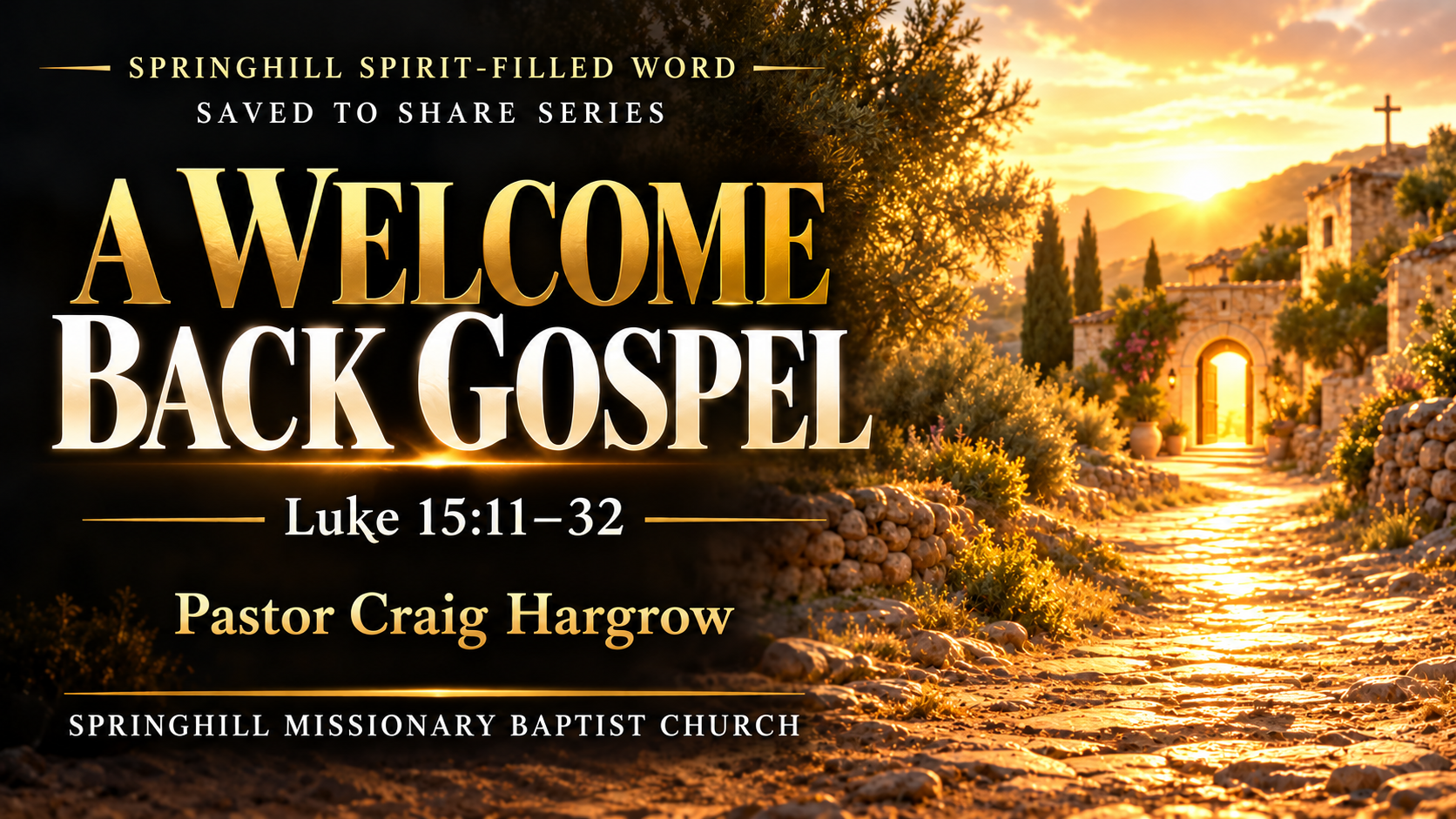
A Welcome Back Gospel: Lessons from the Prodigal Son
The story in Luke 15 is often called the parable of the prodigal son, but Jesus directs our attention to the father. The younger son leaves with his inheritance, wastes it, and reaches the bottom. When he finally comes to himself, he prepares a careful speech and begins the journey home. Yet before he can prove anything, the father sees him at a great distance, has compassion, runs to him, embraces him, and kisses him. That is the heart of a welcome-back gospel. Compassion does not fold its arms. The father does not stand at the door waiting to be impressed by an apology. He moves toward the pain he sees. The son has not answered questions, explained where the money went, or demonstrated that he can be trusted again. The father’s first response is compassion. This does not make repentance unimportant. The son has already come to himself and turned toward home. But the father refuses to make humiliation the price of restoration. He calls for the best robe, a ring, shoes, and a feast. Each gift says that the one who came home will be treated as a son, not marked forever by his worst season. The church should be a place where returning people encounter that same welcome. Too often, someone enters carrying enough fear and shame already, only to meet questions that force them to relive the past. Scripture says that when we confess our sins, God “is faithful and just to forgive us our sins, and to cleanse us from all unrighteousness” (1 John 1:9, KJV). If God has forgiven and cleansed, we should not keep presenting the old record as a person’s permanent identity. The older brother shows us another danger. He measures his faithfulness against his brother’s failure and resents the celebration. Yet the father reminds him that love and restoration are not scarce resources. Someone else’s welcome does not reduce the Father’s love for us. Someone else’s blessing is not evidence that our service has been ignored. The love of Christ “passeth knowledge” (Ephesians 3:19, KJV). It will not always make sense to a world built on scorekeeping, suspicion, and status. Still, it is exactly the love we have received—and the love we are called to extend. So the question is practical: Will we be gatekeepers or gate openers? Will people returning to God meet folded arms, or will they see the compassion of the Father through us? Our welcome may preach more clearly than anything said from a pulpit. This week, look for one opportunity to open the gate. Offer a sincere welcome. Leave a forgiven past in the past. Celebrate a step toward God. Let someone see in your response that there is joy in coming home. REFLECTION QUESTIONS When have fear or shame made it difficult for you to come home? 2. Do you tend to respond more like the father or the older brother? 3. Whose return or growth can you celebrate this week? PRAYER Father, thank You for welcoming us through Jesus Christ. Give us compassion that moves toward people, love that refuses to keep score, and joy that celebrates restoration. Make us gate openers who help others find their way home. Amen.