
God Does Not Discriminate: What the Bible Says About Who Can Receive the Gospel

•
October 25, 2026

8 Minute Read

One of the most powerful truths in Scripture is that God's grace has no boundaries. No cultural wall, social status, or personal background can limit who God chooses to hear, receive, and save. Acts chapter 10 makes this unmistakably clear, and it carries a challenge for every believer today.


What Is Acts Chapter 10 Really About?


Acts 10 marks a turning point in the spread of the Gospel. While the idea of salvation for all people is woven throughout the New Testament, this chapter draws a clear line in the sand. God specifically reveals to the apostle Peter that salvation through Jesus Christ is not limited to the Jewish people. It is for the Gentiles too, which means it is for everyone.


If you were not born into the Jewish nation, you were considered a Gentile. And in the cultural and religious climate of that time, many believed Gentiles had no real access to God.


Acts 10 says otherwise.


Who Was Cornelius and Why Does He Matter?


The chapter opens with a man named Cornelius, a centurion in the Italian regiment of the Roman army. Most biblical scholars believe he was a Gentile. Historical context supports this, since Jewish people were not permitted to rise to high military ranks in the Roman army.


But here is what stands out about Cornelius. The Scripture describes him this way:


"A devout man, and one that feared God with all His house, which gave much alms to the people, and prayed to God alway." - Acts 10:2


Being a Gentile and being devout were not mutually exclusive, even though many people of that era believed they were. Cornelius was praying, giving, and worshiping a God that some people told Him He had no access to.


Does God Hear the Prayers of People Others Have Written Off?


An angel of the Lord appeared to Cornelius and said something remarkable. He told him that his prayers and his giving had come up as a memorial before God.


The word "memorial" here is not casual language. It is a reference rooted in Old Testament sacrificial offerings, specifically the portion of the offering set apart directly for God. This was not just God noticing Cornelius from a distance. This was God saying, "I receive it. I accept it."


People had written Cornelius off. The religious and cultural walls of his day said he was on the outside. But God was paying attention the entire time.


What Does This Mean for People Who Feel Overlooked or Rejected?


This is where the message becomes deeply personal. There are people who have been mislabeled, dismissed, and counted out by others, sometimes even by people they love and trust. But here is the truth that Acts 10 makes plain.


People's opinions of you do not change God's mind about you.


Consider what Scripture says:


- "According as he hath chosen us in him before the foundation of the world, that we should be holy and without blame before him in love." - Ephesians 1:4

- "Are not five sparrows sold for two farthings, and not one of them is forgotten before God? But even the very hairs of your head are all numbered. Fear not therefore: ye are of more value than many sparrows." - Luke 12:6-7

- "For God so loved the world, that He gave His only begotten Son, that whosoever believeth in Him should not perish, but have everlasting life." - John 3:16


People may reject you. God still hears your prayer. People may dismiss you. God is still looking after you. People may count you out. But God has plans for you that they were never consulted about.


Keep praying. Keep worshiping. Keep doing what God has called you to do, regardless of the naysayers.


Peter's Vision: What God Has Cleansed, Call Not Common


While Cornelius was receiving His vision, Peter was on a rooftop in Joppa, hungry and praying. He fell into a trance and saw a vision of a large sheet descending from heaven, filled with all kinds of animals, including those considered unclean under Jewish law. A voice told him to rise, kill, and eat.


Peter refused. He said he had never eaten anything common or unclean.


The voice responded a second time:


"What God hath cleansed, that call not thou common." - Acts 10:15


This happened three times. Then the sheet was taken back up into heaven.


While Peter was still trying to make sense of the vision, the three men sent by Cornelius arrived at the front door. The Spirit of God told Peter to go downstairs and go with them without hesitation, because God had sent them.


Why Did Peter Go Into a Gentile's Home?


Peter walked into Cornelius's house knowing full well that Jewish law and cultural norms said he should not be there. He even acknowledged it openly. He said it was unlawful for a Jewish man to keep company with someone of another nation. But then he said something that changed everything.


He said God had shown Him something different. God told Him not to call any person common or unclean.


Peter did not bend the rules on his own. He did not decide to evolve past his upbringing through personal growth alone. He had an encounter with God that required Him to act differently than everything He had been taught.


And when he stood before a room full of Gentiles, he opened his message with one of the most powerful lines in the book of Acts:


"Of a truth I perceive that God is no respecter of persons." - Acts 10:34


What Happened When Peter Preached to the Gentiles?


Peter shared the Gospel. He told them about Jesus, His life, His death, and His resurrection. And before he even finished speaking, the Holy Spirit fell on everyone in that room. They began speaking in tongues and magnifying God.


The Jewish believers who had traveled with Peter from Joppa were astonished. They witnessed it with their own eyes. And that was not an accident. If Peter had gone alone and come back with a story, no one would have believed him. God made sure there were witnesses.


Obedience to God, even when it goes against everything you were raised to believe, opens the door for God to do miraculous things.


Why Are We Reluctant to Share the Gospel With Certain People?


This is the honest question that Acts 10 forces us to sit with. If God does not discriminate regarding who can receive the Gospel, why do we hesitate to share it with certain people? Why do we put up barriers based on culture, background, politics, or personal history?


Breaking past those barriers is not easy. Many of us carry generational teachings, real experiences, and deep-rooted perspectives that shape how we see others. That is real and it should not be minimized.


But Peter's transformation was not a natural evolution. It took a direct encounter with God, repeated three times, before He moved. The Gospel is designed to kick open doors that have been closed. And when we are willing to receive what God has for us, He will do things that astonish even the most skeptical witnesses.


Salvation is available to everyone. It does not matter where someone was born, how much money they have, the color of their skin, their political affiliation, or how they identify. The same grace that woke you up this morning is the same grace extended to the person you may have already written off.


Life Application


This week, identify someone or a group of people that you have placed a barrier between yourself and. It may be cultural, historical, or personal. Ask God honestly whether that barrier is one He wants to remain or one He is calling you to walk through.


You do not have to force it. If God says stay, stay. But if God says go, trust that He will protect you and use you when you get there. The Gospel does not belong only to the people who look like us, think like us, or come from where we come from. It belongs to the world.


Ask yourself these questions this week:


- Is there someone I have decided is not worth sharing the Gospel with, and where did that belief come from?

- Am I allowing cultural or social norms to override what God may be calling me to do?

- If God receives the prayers and worship of people others have written off, what does that say about how I should treat those same people?

- What would it look like for me to take one step this week toward someone I have kept at a distance?


God is no respecter of persons. Neither should we be.
Up Next
From this Tag: Grace
November 1, 2026 • 18 Minute Read
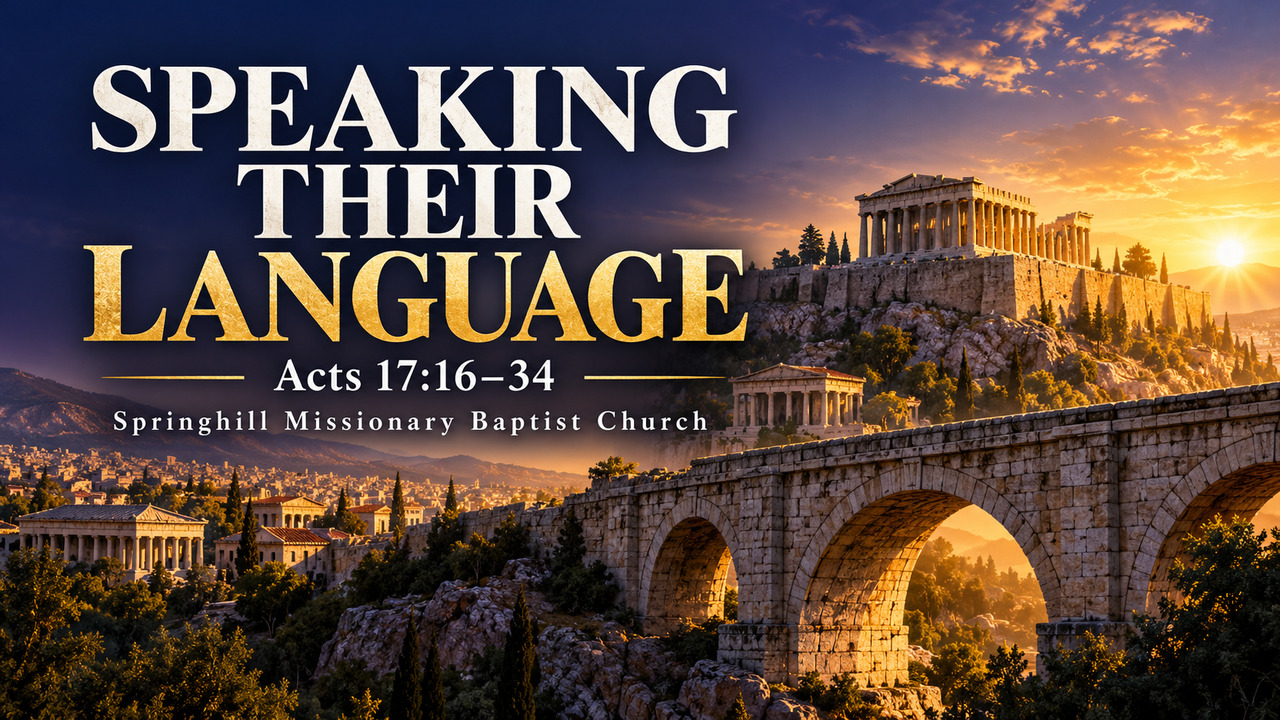
Speaking Their Language: How to Share the Gospel With Anyone
Sharing the gospel is one of the most important things a Christian can do, but it is also one of the most misunderstood. Many believers know what they believe, but struggle to communicate it in a way that actually connects with the people around them. The truth does not change, but the way we deliver it must meet people where they are. Why Does Sharing the Gospel Feel So Hard? The challenge is not the message itself. The challenge is the language. When a missionary travels to a foreign country and preaches without an interpreter, it does not matter how sound the doctrine is or how passionately it is delivered. If the people cannot understand the language, the message falls on deaf ears. The same principle applies right here at home. Every person you encounter is coming from a different place, carrying different questions, different wounds, and different beliefs. That means they are often speaking a different language, even if the words sound familiar. The gospel does not change. But the language must. What Can We Learn From Paul in Athens? In Acts 17, the apostle Paul finds himself in Athens waiting for his companions Silas and Timothy. Athens was a city filled with philosophy, intellectual debate, and devotion to many idol gods. It was a culture that shared none of Paul's biblical foundation. Rather than retreating, Paul leaned in. He went to the synagogue. He went to the marketplace. He engaged with philosophers who thought he had no idea what he was talking about. Eventually, he was brought to the Areopagus, a hill named after the Greek God of war, to explain His message to people who worshiped false gods. And that is exactly where he chose to speak. There are three lessons from this passage that every believer can carry into their daily life. Lesson One: Observe People Before You Address People Paul did not walk into Athens with a prepared script and deliver it regardless of his audience. He paid attention. He walked around, looked at the altars, studied the culture, and noticed something remarkable. Among all the shrines to various gods, there was one altar with an inscription that read: "To the Unknown God." Paul did not have to invent an opening. He simply paid attention to what was already there. Sometimes we miss opportunities to share the gospel because we are so focused on what we want to say that we never stop to hear what people are actually saying. We have a script in our heads, and no matter what someone shares with us, we are going to deliver our point regardless. Effective gospel sharing begins with a willingness to listen before speaking, to ask before assuming, and to understand someone's beliefs before trying to correct them. There are people all around us who are already asking spiritual questions. Someone says they do not know what they are supposed to do with their life. Someone wonders if anyone truly loves them. Someone is searching for peace in the middle of chaos. Someone is looking for community but running to all the wrong places to find it. All of those longings are open doors. But we walk right past them because we are too busy preparing our presentation to notice the person standing in front of us. What Does Observation Require? Observation requires humility. You cannot assume you understand someone's story because you have observed their behavior. You cannot look at how someone dresses, how they talk, or how they move and think you know everything about them. Humility means listening with compassion while remaining committed to biblical truth. It means asking sincere questions even when those questions might lead to conflict or to answers you do not have. Lesson Two: You Can Build a Bridge Without Changing the Destination Once Paul identified that point of connection, the altar to the unknown God, He began to build a bridge. He said, in effect, "You have acknowledged a God you do not know. Let me introduce you to Him." He declared in Acts 17:24-25 that God made the world and everything in it, that He does not live in temples built by human hands, and that He does not need anything from us because He is the one who gives life and breath to everyone. Paul took their religious activity and built a bridge from it to the character of the living God. He even quoted their own poets, saying in Acts 17:28, "For in him we live and move and have our being, as even some of your own poets have said, for we are indeed his offspring." He used language familiar to them to communicate a truth that was completely new to them. He was aware of the culture without being controlled by it. What Makes a Bridge Structurally Sound? A bridge has to be functional first. It does not matter how beautiful it looks if it cannot hold the weight of what it is carrying. The gospel we share must be structurally sound. The foundation must be sure before anything else is added. And here is the critical point: speaking a different language does not mean saying a different thing. It means saying the same thing in a different way. There is a real danger in wanting so badly to connect with people that we compromise the message. Some people want to build a bridge so much that they leave out the parts of the gospel that might make someone uncomfortable. But if we tell people that God loves them without explaining salvation, the message is incomplete. If we say Jesus is an inspiration but never proclaim Him as the crucified and risen Savior, we are building a bridge that only goes halfway. You cannot cross a bridge that is not finished. Paul did not stop at empathy. He did not stop at cultural connection. He took the conversation all the way to the resurrection, the judgment of God, and the call to repent. He met people where they were because he cared deeply about where they were going. Are We Too Disconnected From the People We Are Trying to Reach? To build a bridge, you have to know where people are starting from. If we spend all of our time surrounded by like-minded people and go out of our way to avoid those who think or live differently, we will not know how to speak their language. We will hand someone a card and invite them to church without ever understanding what they are actually going through. We cannot get so comfortable in our church culture that we forget what it felt like to struggle, to search, or to not have the answers. The moment we start looking down at people from a distance, we lose the ability to build anything that connects. Lesson Three: Your Faithfulness Is Not Measured by Everyone's Response Even when we observe carefully and communicate faithfully, we cannot control how people respond. Paul proclaimed the resurrection of the dead, and the responses were all over the map. Some mocked him. Some said they wanted to hear more. And some joined him and believed. Same message. Same moment. Completely different responses. Rejection does not mean failure. Jesus Himself was rejected by people who heard Him speak in person and watched Him perform miracles. John 6:66 tells us that after hearing His teaching, many of His followers turned back and no longer walked with Him. Jesus did not change His message to keep the crowd. If people rejected Jesus, they will reject us too. Because we are not sharing ourselves. We are sharing Jesus. How Do We Handle Rejection When Sharing Our Faith? Public rejection can be discouraging, but it should not be a deterrent. Notice that Acts 17 does not end with the mockers. It ends with those who joined Paul and believed. The mockers did not prevent the believers. Do not allow the people who refuse to listen to distract you from the people who are ready to hear. If you spend all your time arguing with those who are determined to reject the message, you will never reach the ones who are genuinely hungry for it. Say what you have to say. Share the word. And let God do the rest. The World Is Changing. The Message Is Not. Language is changing. Culture is changing. The questions people are asking are changing faster than ever. But Jesus is the same yesterday, today, and forever. The challenge for every believer is to communicate that unchanging Jesus in as many languages as possible. That means being willing to meet people in their confusion without getting frustrated. It means entering into their search for purpose without acting like we have everything figured out. It means sitting with people in their pain and pointing them, through the word of God, to the one who can actually heal it. We must learn the language without losing the message. We must build the bridge without changing the destination. And we must keep pointing people to Jesus, no matter how many times we are turned away. Life Application This week, before you try to share your faith with someone, commit to listening first. Find one person in your life who does not share your beliefs or who is clearly searching for something, and instead of leading with what you want to say, ask them a genuine question about their life and actually listen to the answer. Pay attention to what they are really asking underneath the surface. Then, when the moment is right, build a bridge from where they are to the truth of who God is. Ask yourself these questions as you go into the week: - Am I so focused on delivering my message that I am missing the questions the people around me are already asking? - Have I become so comfortable in church culture that I have lost the ability to speak the language of people who are still searching? - Am I letting fear of rejection keep me from sharing the gospel with someone who genuinely needs to hear it? - When I share my faith, am I giving people the full message, or am I building a bridge that only goes halfway? The people around you are hungry. Some of them do not even know what they are hungry for. Be the one who offers them living water and the bread of life, spoken in a language they can actually receive.Sharing the gospel is one of the most important things a Christian can do, but it is also one of the most misunderstood. Many believers know what they believe, but struggle to communicate it in a way that actually connects with the people around them. The truth does not change, but the way we deliver it must meet people where they are. Why Does Sharing the Gospel Feel So Hard? The challenge is not the message itself. The challenge is the language. When a missionary travels to a foreign country and preaches without an interpreter, it does not matter how sound the doctrine is or how passionately it is delivered. If the people cannot understand the language, the message falls on deaf ears. The same principle applies right here at home. Every person you encounter is coming from a different place, carrying different questions, different wounds, and different beliefs. That means they are often speaking a different language, even if the words sound familiar. The gospel does not change. But the language must. What Can We Learn From Paul in Athens? In Acts 17, the apostle Paul finds himself in Athens waiting for his companions Silas and Timothy. Athens was a city filled with philosophy, intellectual debate, and devotion to many idol gods. It was a culture that shared none of Paul's biblical foundation. Rather than retreating, Paul leaned in. He went to the synagogue. He went to the marketplace. He engaged with philosophers who thought he had no idea what he was talking about. Eventually, he was brought to the Areopagus, a hill named after the Greek God of war, to explain His message to people who worshiped false gods. And that is exactly where he chose to speak. There are three lessons from this passage that every believer can carry into their daily life. Lesson One: Observe People Before You Address People Paul did not walk into Athens with a prepared script and deliver it regardless of his audience. He paid attention. He walked around, looked at the altars, studied the culture, and noticed something remarkable. Among all the shrines to various gods, there was one altar with an inscription that read: "To the Unknown God." Paul did not have to invent an opening. He simply paid attention to what was already there. Sometimes we miss opportunities to share the gospel because we are so focused on what we want to say that we never stop to hear what people are actually saying. We have a script in our heads, and no matter what someone shares with us, we are going to deliver our point regardless. Effective gospel sharing begins with a willingness to listen before speaking, to ask before assuming, and to understand someone's beliefs before trying to correct them. There are people all around us who are already asking spiritual questions. Someone says they do not know what they are supposed to do with their life. Someone wonders if anyone truly loves them. Someone is searching for peace in the middle of chaos. Someone is looking for community but running to all the wrong places to find it. All of those longings are open doors. But we walk right past them because we are too busy preparing our presentation to notice the person standing in front of us. What Does Observation Require? Observation requires humility. You cannot assume you understand someone's story because you have observed their behavior. You cannot look at how someone dresses, how they talk, or how they move and think you know everything about them. Humility means listening with compassion while remaining committed to biblical truth. It means asking sincere questions even when those questions might lead to conflict or to answers you do not have. Lesson Two: You Can Build a Bridge Without Changing the Destination Once Paul identified that point of connection, the altar to the unknown God, He began to build a bridge. He said, in effect, "You have acknowledged a God you do not know. Let me introduce you to Him." He declared in Acts 17:24-25 that God made the world and everything in it, that He does not live in temples built by human hands, and that He does not need anything from us because He is the one who gives life and breath to everyone. Paul took their religious activity and built a bridge from it to the character of the living God. He even quoted their own poets, saying in Acts 17:28, "For in him we live and move and have our being, as even some of your own poets have said, for we are indeed his offspring." He used language familiar to them to communicate a truth that was completely new to them. He was aware of the culture without being controlled by it. What Makes a Bridge Structurally Sound? A bridge has to be functional first. It does not matter how beautiful it looks if it cannot hold the weight of what it is carrying. The gospel we share must be structurally sound. The foundation must be sure before anything else is added. And here is the critical point: speaking a different language does not mean saying a different thing. It means saying the same thing in a different way. There is a real danger in wanting so badly to connect with people that we compromise the message. Some people want to build a bridge so much that they leave out the parts of the gospel that might make someone uncomfortable. But if we tell people that God loves them without explaining salvation, the message is incomplete. If we say Jesus is an inspiration but never proclaim Him as the crucified and risen Savior, we are building a bridge that only goes halfway. You cannot cross a bridge that is not finished. Paul did not stop at empathy. He did not stop at cultural connection. He took the conversation all the way to the resurrection, the judgment of God, and the call to repent. He met people where they were because he cared deeply about where they were going. Are We Too Disconnected From the People We Are Trying to Reach? To build a bridge, you have to know where people are starting from. If we spend all of our time surrounded by like-minded people and go out of our way to avoid those who think or live differently, we will not know how to speak their language. We will hand someone a card and invite them to church without ever understanding what they are actually going through. We cannot get so comfortable in our church culture that we forget what it felt like to struggle, to search, or to not have the answers. The moment we start looking down at people from a distance, we lose the ability to build anything that connects. Lesson Three: Your Faithfulness Is Not Measured by Everyone's Response Even when we observe carefully and communicate faithfully, we cannot control how people respond. Paul proclaimed the resurrection of the dead, and the responses were all over the map. Some mocked him. Some said they wanted to hear more. And some joined him and believed. Same message. Same moment. Completely different responses. Rejection does not mean failure. Jesus Himself was rejected by people who heard Him speak in person and watched Him perform miracles. John 6:66 tells us that after hearing His teaching, many of His followers turned back and no longer walked with Him. Jesus did not change His message to keep the crowd. If people rejected Jesus, they will reject us too. Because we are not sharing ourselves. We are sharing Jesus. How Do We Handle Rejection When Sharing Our Faith? Public rejection can be discouraging, but it should not be a deterrent. Notice that Acts 17 does not end with the mockers. It ends with those who joined Paul and believed. The mockers did not prevent the believers. Do not allow the people who refuse to listen to distract you from the people who are ready to hear. If you spend all your time arguing with those who are determined to reject the message, you will never reach the ones who are genuinely hungry for it. Say what you have to say. Share the word. And let God do the rest. The World Is Changing. The Message Is Not. Language is changing. Culture is changing. The questions people are asking are changing faster than ever. But Jesus is the same yesterday, today, and forever. The challenge for every believer is to communicate that unchanging Jesus in as many languages as possible. That means being willing to meet people in their confusion without getting frustrated. It means entering into their search for purpose without acting like we have everything figured out. It means sitting with people in their pain and pointing them, through the word of God, to the one who can actually heal it. We must learn the language without losing the message. We must build the bridge without changing the destination. And we must keep pointing people to Jesus, no matter how many times we are turned away. Life Application This week, before you try to share your faith with someone, commit to listening first. Find one person in your life who does not share your beliefs or who is clearly searching for something, and instead of leading with what you want to say, ask them a genuine question about their life and actually listen to the answer. Pay attention to what they are really asking underneath the surface. Then, when the moment is right, build a bridge from where they are to the truth of who God is. Ask yourself these questions as you go into the week: - Am I so focused on delivering my message that I am missing the questions the people around me are already asking? - Have I become so comfortable in church culture that I have lost the ability to speak the language of people who are still searching? - Am I letting fear of rejection keep me from sharing the gospel with someone who genuinely needs to hear it? - When I share my faith, am I giving people the full message, or am I building a bridge that only goes halfway? The people around you are hungry. Some of them do not even know what they are hungry for. Be the one who offers them living water and the bread of life, spoken in a language they can actually receive.
October 25, 2026 • 8 Minute Read
God Does Not Discriminate: What the Bible Says About Who Can Receive the Gospel
One of the most powerful truths in Scripture is that God's grace has no boundaries. No cultural wall, social status, or personal background can limit who God chooses to hear, receive, and save. Acts chapter 10 makes this unmistakably clear, and it carries a challenge for every believer today. What Is Acts Chapter 10 Really About? Acts 10 marks a turning point in the spread of the Gospel. While the idea of salvation for all people is woven throughout the New Testament, this chapter draws a clear line in the sand. God specifically reveals to the apostle Peter that salvation through Jesus Christ is not limited to the Jewish people. It is for the Gentiles too, which means it is for everyone. If you were not born into the Jewish nation, you were considered a Gentile. And in the cultural and religious climate of that time, many believed Gentiles had no real access to God. Acts 10 says otherwise. Who Was Cornelius and Why Does He Matter? The chapter opens with a man named Cornelius, a centurion in the Italian regiment of the Roman army. Most biblical scholars believe he was a Gentile. Historical context supports this, since Jewish people were not permitted to rise to high military ranks in the Roman army. But here is what stands out about Cornelius. The Scripture describes him this way: "A devout man, and one that feared God with all His house, which gave much alms to the people, and prayed to God alway." - Acts 10:2 Being a Gentile and being devout were not mutually exclusive, even though many people of that era believed they were. Cornelius was praying, giving, and worshiping a God that some people told Him He had no access to. Does God Hear the Prayers of People Others Have Written Off? An angel of the Lord appeared to Cornelius and said something remarkable. He told him that his prayers and his giving had come up as a memorial before God. The word "memorial" here is not casual language. It is a reference rooted in Old Testament sacrificial offerings, specifically the portion of the offering set apart directly for God. This was not just God noticing Cornelius from a distance. This was God saying, "I receive it. I accept it." People had written Cornelius off. The religious and cultural walls of his day said he was on the outside. But God was paying attention the entire time. What Does This Mean for People Who Feel Overlooked or Rejected? This is where the message becomes deeply personal. There are people who have been mislabeled, dismissed, and counted out by others, sometimes even by people they love and trust. But here is the truth that Acts 10 makes plain. People's opinions of you do not change God's mind about you. Consider what Scripture says: - "According as he hath chosen us in him before the foundation of the world, that we should be holy and without blame before him in love." - Ephesians 1:4 - "Are not five sparrows sold for two farthings, and not one of them is forgotten before God? But even the very hairs of your head are all numbered. Fear not therefore: ye are of more value than many sparrows." - Luke 12:6-7 - "For God so loved the world, that He gave His only begotten Son, that whosoever believeth in Him should not perish, but have everlasting life." - John 3:16 People may reject you. God still hears your prayer. People may dismiss you. God is still looking after you. People may count you out. But God has plans for you that they were never consulted about. Keep praying. Keep worshiping. Keep doing what God has called you to do, regardless of the naysayers. Peter's Vision: What God Has Cleansed, Call Not Common While Cornelius was receiving His vision, Peter was on a rooftop in Joppa, hungry and praying. He fell into a trance and saw a vision of a large sheet descending from heaven, filled with all kinds of animals, including those considered unclean under Jewish law. A voice told him to rise, kill, and eat. Peter refused. He said he had never eaten anything common or unclean. The voice responded a second time: "What God hath cleansed, that call not thou common." - Acts 10:15 This happened three times. Then the sheet was taken back up into heaven. While Peter was still trying to make sense of the vision, the three men sent by Cornelius arrived at the front door. The Spirit of God told Peter to go downstairs and go with them without hesitation, because God had sent them. Why Did Peter Go Into a Gentile's Home? Peter walked into Cornelius's house knowing full well that Jewish law and cultural norms said he should not be there. He even acknowledged it openly. He said it was unlawful for a Jewish man to keep company with someone of another nation. But then he said something that changed everything. He said God had shown Him something different. God told Him not to call any person common or unclean. Peter did not bend the rules on his own. He did not decide to evolve past his upbringing through personal growth alone. He had an encounter with God that required Him to act differently than everything He had been taught. And when he stood before a room full of Gentiles, he opened his message with one of the most powerful lines in the book of Acts: "Of a truth I perceive that God is no respecter of persons." - Acts 10:34 What Happened When Peter Preached to the Gentiles? Peter shared the Gospel. He told them about Jesus, His life, His death, and His resurrection. And before he even finished speaking, the Holy Spirit fell on everyone in that room. They began speaking in tongues and magnifying God. The Jewish believers who had traveled with Peter from Joppa were astonished. They witnessed it with their own eyes. And that was not an accident. If Peter had gone alone and come back with a story, no one would have believed him. God made sure there were witnesses. Obedience to God, even when it goes against everything you were raised to believe, opens the door for God to do miraculous things. Why Are We Reluctant to Share the Gospel With Certain People? This is the honest question that Acts 10 forces us to sit with. If God does not discriminate regarding who can receive the Gospel, why do we hesitate to share it with certain people? Why do we put up barriers based on culture, background, politics, or personal history? Breaking past those barriers is not easy. Many of us carry generational teachings, real experiences, and deep-rooted perspectives that shape how we see others. That is real and it should not be minimized. But Peter's transformation was not a natural evolution. It took a direct encounter with God, repeated three times, before He moved. The Gospel is designed to kick open doors that have been closed. And when we are willing to receive what God has for us, He will do things that astonish even the most skeptical witnesses. Salvation is available to everyone. It does not matter where someone was born, how much money they have, the color of their skin, their political affiliation, or how they identify. The same grace that woke you up this morning is the same grace extended to the person you may have already written off. Life Application This week, identify someone or a group of people that you have placed a barrier between yourself and. It may be cultural, historical, or personal. Ask God honestly whether that barrier is one He wants to remain or one He is calling you to walk through. You do not have to force it. If God says stay, stay. But if God says go, trust that He will protect you and use you when you get there. The Gospel does not belong only to the people who look like us, think like us, or come from where we come from. It belongs to the world. Ask yourself these questions this week: - Is there someone I have decided is not worth sharing the Gospel with, and where did that belief come from? - Am I allowing cultural or social norms to override what God may be calling me to do? - If God receives the prayers and worship of people others have written off, what does that say about how I should treat those same people? - What would it look like for me to take one step this week toward someone I have kept at a distance? God is no respecter of persons. Neither should we be.