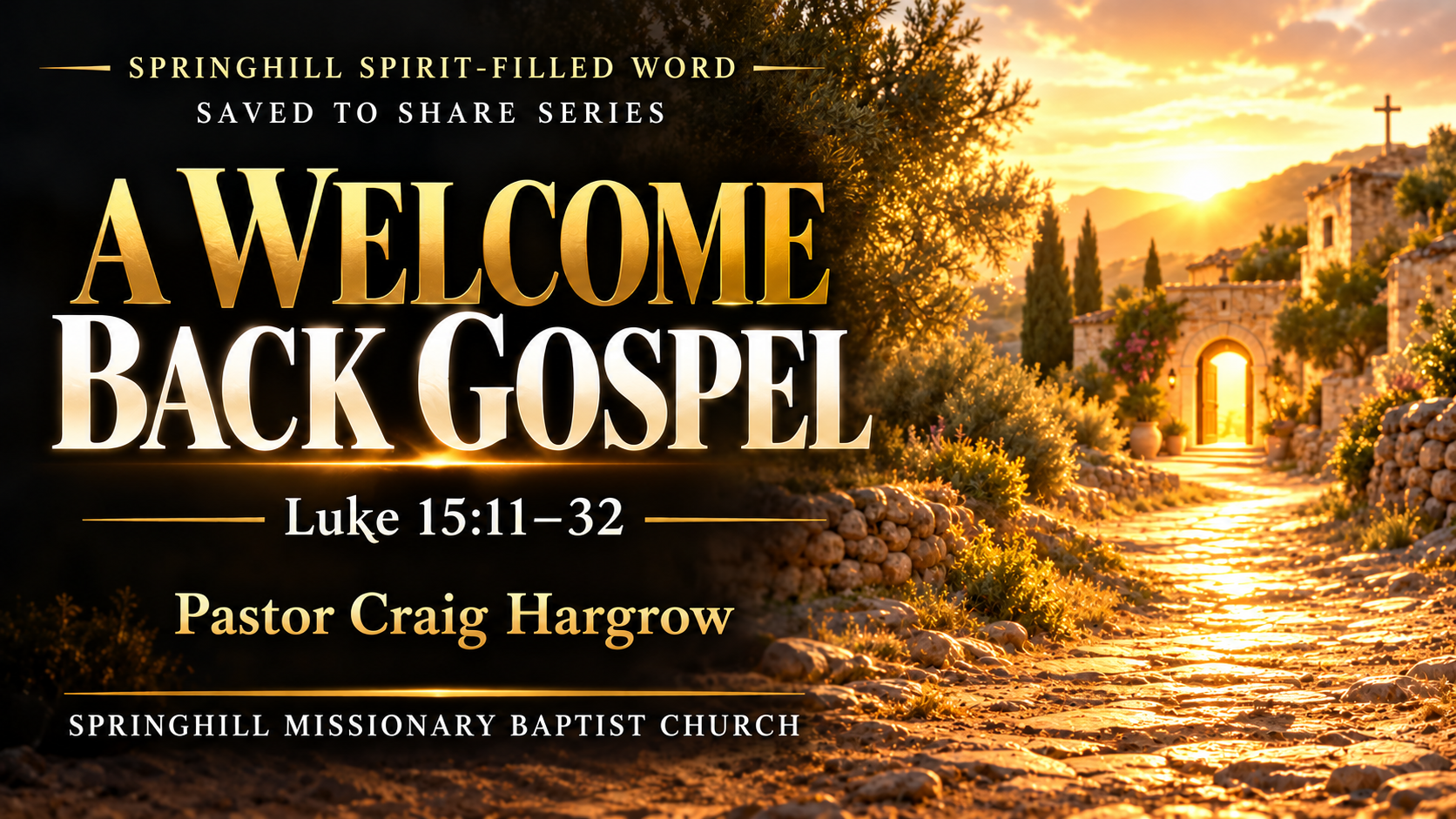
The story in Luke 15 is often called the parable of the prodigal son, but Jesus directs our attention to the father. The younger son leaves with his inheritance, wastes it, and reaches the bottom. When he finally comes to himself, he prepares a careful speech and begins the journey home. Yet before he can prove anything, the father sees him at a great distance, has compassion, runs to him, embraces him, and kisses him.
That is the heart of a welcome-back gospel.
Compassion does not fold its arms. The father does not stand at the door waiting to be impressed by an apology. He moves toward the pain he sees. The son has not answered questions, explained where the money went, or demonstrated that he can be trusted again. The father’s first response is compassion.
This does not make repentance unimportant. The son has already come to himself and turned toward home. But the father refuses to make humiliation the price of restoration. He calls for the best robe, a ring, shoes, and a feast. Each gift says that the one who came home will be treated as a son, not marked forever by his worst season.
The church should be a place where returning people encounter that same welcome. Too often, someone enters carrying enough fear and shame already, only to meet questions that force them to relive the past. Scripture says that when we confess our sins, God “is faithful and just to forgive us our sins, and to cleanse us from all unrighteousness” (1 John 1:9, KJV). If God has forgiven and cleansed, we should not keep presenting the old record as a person’s permanent identity.
The older brother shows us another danger. He measures his faithfulness against his brother’s failure and resents the celebration. Yet the father reminds him that love and restoration are not scarce resources. Someone else’s welcome does not reduce the Father’s love for us. Someone else’s blessing is not evidence that our service has been ignored.
The love of Christ “passeth knowledge” (Ephesians 3:19, KJV). It will not always make sense to a world built on scorekeeping, suspicion, and status. Still, it is exactly the love we have received—and the love we are called to extend.
So the question is practical: Will we be gatekeepers or gate openers? Will people returning to God meet folded arms, or will they see the compassion of the Father through us? Our welcome may preach more clearly than anything said from a pulpit.
This week, look for one opportunity to open the gate. Offer a sincere welcome. Leave a forgiven past in the past. Celebrate a step toward God. Let someone see in your response that there is joy in coming home.
REFLECTION QUESTIONS
- When have fear or shame made it difficult for you to come home?
- 2. Do you tend to respond more like the father or the older brother?
- 3. Whose return or growth can you celebrate this week?
PRAYER
Father, thank You for welcoming us through Jesus Christ. Give us compassion that moves toward people, love that refuses to keep score, and joy that celebrates restoration. Make us gate openers who help others find their way home. Amen.